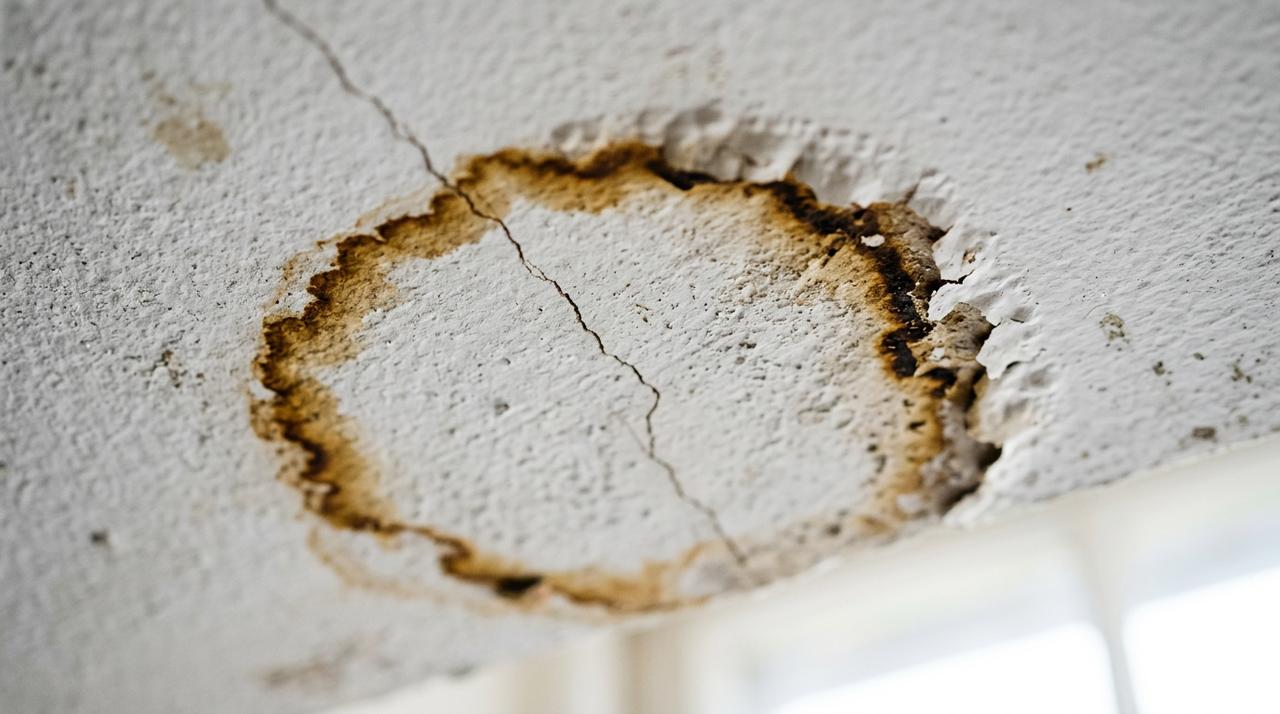
Why Beaumont Ceilings Fail
Ceilings in Southeast Texas take punishment that inland ceilings do not, and the storm record explains most of the ceiling damage in the city's housing stock.
- Hurricane Rita, 2005. Came ashore as a Category 3 and devastated Beaumont, tearing away roofing across the city.
- Hurricane Ike, 2008. Made landfall 65 miles south with 110 mph winds; Port Arthur recorded gusts of 83 mph and a surge above 11 feet.
- Harvey, 2017. Dropped up to 49 inches of rain in and around Beaumont — the defining local flood event.
- Hurricane Laura, 2020. Passed 32 miles east at 140 mph; more than 385,000 people were told to leave Beaumont, Galveston, Port Arthur and Baytown.
- Beryl, 2024. Wind, rain and isolated tornadoes across Southeast Texas.
Add to that a humid subtropical climate that keeps attics warm and damp, and slab-founded houses that move with the clay beneath them, and you get the three failure modes we see constantly: water staining from roof and flashing leaks, sagging or delaminated board where drywall got soaked and lost its bond, and cracking along joints where the structure has moved.
Fix the Source First
This is the part worth being blunt about: there is no point refinishing a ceiling underneath a live leak. If water is still getting in, a new skim coat and a fresh coat of paint will be stained again inside a season, and you will have paid twice. Roof, flashing or plumbing first — ceiling second. If you are not certain whether a leak is still active, establish that before booking any ceiling work.
Once the source is dealt with, the repair itself is straightforward: cut out any board that has softened or lost its bond, replace it, tape and finish the joints, then blend the surface. Dried stains on otherwise sound board need a stain-blocking primer — water stains carry tannins that bleed straight through ordinary ceiling paint, sometimes weeks later.