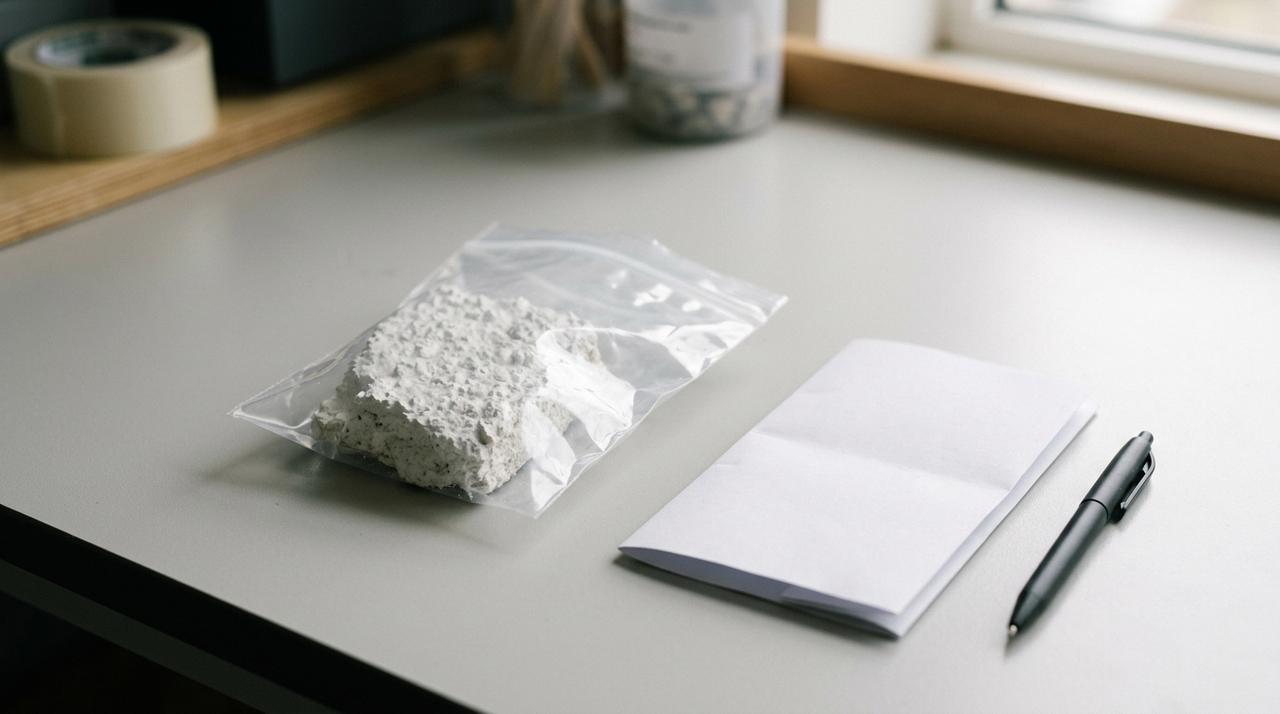
Why Pre-1980 Beaumont Popcorn Ceilings Get Tested
Sprayed acoustic ceiling texture — popcorn — was manufactured with chrysotile asbestos for decades because it was cheap, fire-resistant and it hung together well when sprayed. Federal restrictions on spray-applied asbestos surfacing materials came in through the 1970s, but there was no order to destroy existing inventory. Contractors kept spraying the popcorn that was already on the shelf. That is why the working rule for popcorn ceiling removal is pre-1980, test it rather than a single tidy cutoff year.
More than half of Beaumont's housing stock — 52.8% of 52,439 units — predates 1980. If you are standing under a popcorn ceiling in a Beaumont house that has not been renovated, the honest answer is that nobody knows what is in that popcorn until a sample is analysed.
This is the step that separates a competent popcorn ceiling removal from a cheap one. Testing costs less than a wasted day of labour, it takes a few days, and it decides everything downstream: the method, the containment, the disposal and the price. A contractor who offers to start scraping popcorn in a pre-1980 Beaumont house tomorrow morning without a sample is telling you something important about how they work.
What Texas Law Actually Requires
This is the part almost nothing online gets right, so here it is plainly.
The Texas Asbestos Health Protection Rules, administered by the Texas Department of State Health Services, govern asbestos work in public buildings. DSHS is explicit: a person must be licensed as an asbestos abatement contractor by the department to engage in asbestos abatement in a public building. Where the work exceeds 160 square feet, 260 linear feet or 35 cubic feet, a licensed consultant must also design the project.
Private residences and apartment buildings with no more than four dwelling units are excluded from coverage by those rules. So for a single-family house in Beaumont, Texas does not require you to hire a licensed abatement contractor to take down a popcorn ceiling.
We would rather tell you that than let you find it out from somebody selling against it. But read the next paragraph before you buy a scraper.
The Exemption Is About Paperwork, Not Safety
A regulatory exclusion does not change what happens in the air. Dry-scraping an asbestos-containing ceiling releases respirable fibers into a sealed indoor space, and those fibers do not check whether the building is classified as public. The difference between a regulated commercial abatement and a homeowner with a putty knife is not the hazard — it is the containment, the negative air, the respirator, and the disposal.
- Test before you decide anything. A negative result makes the whole question moot and turns it into an ordinary popcorn ceiling removal.
- Never dry-scrape an untested pre-1980 popcorn ceiling. This is the one genuinely dangerous shortcut in the entire job.
- A positive result is not an emergency. Intact, undisturbed popcorn texture is not releasing fibers. You have time to choose.
- Covering is a real option. New drywall over the popcorn seals it permanently, often for less than abatement.
Multi-family is different. An apartment building with five or more units, an office, a clinic or a school is a public building under the Texas rules, and abatement there genuinely does require a licensed contractor — see commercial and multi-family ceiling removal.